“Timeless is the wheel that brings it round”

The new season starts in earnest this week. This is a moment to savor — that last deep breath before the plunge into the reliable cycle of the farming year. This week I start leeks, next week onions, kale the week after that, and on down the line. The bulk of my greenhouse work is finished by June, but as early as late April my benches are full of new green plants eager to be transplanted into the field.
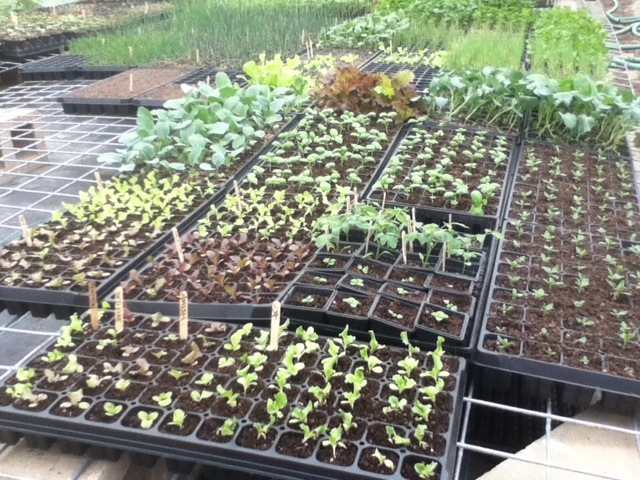
greenhouse

But before that can happen, I need to make the fields ready. The last couple of years, I relied on a neighbor to run his disk harrow through the field. This year, I get to use my new tractor for that job.
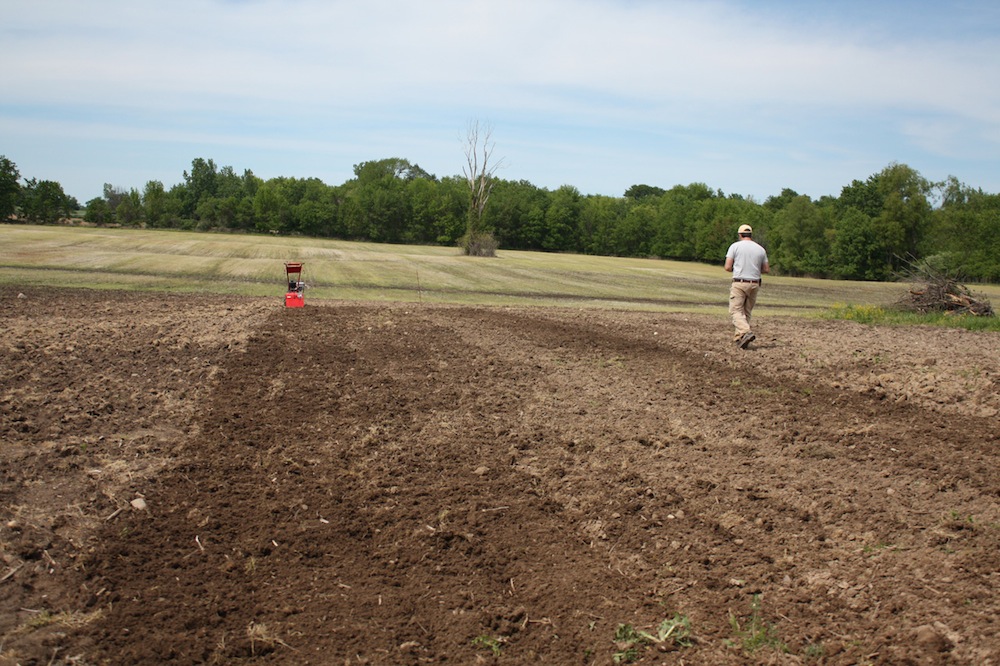
tiller

Once the primary tillage is completed, I begin preparing beds. Last year I spent a lot of time breaking though compacted soil with my broadfork, then further refining the soil with my walk-behind tiller and shaping beds by hand with a rake. This process worked, but it took a great deal of time. This year, again, I will use the tractor, which should move things along considerably.
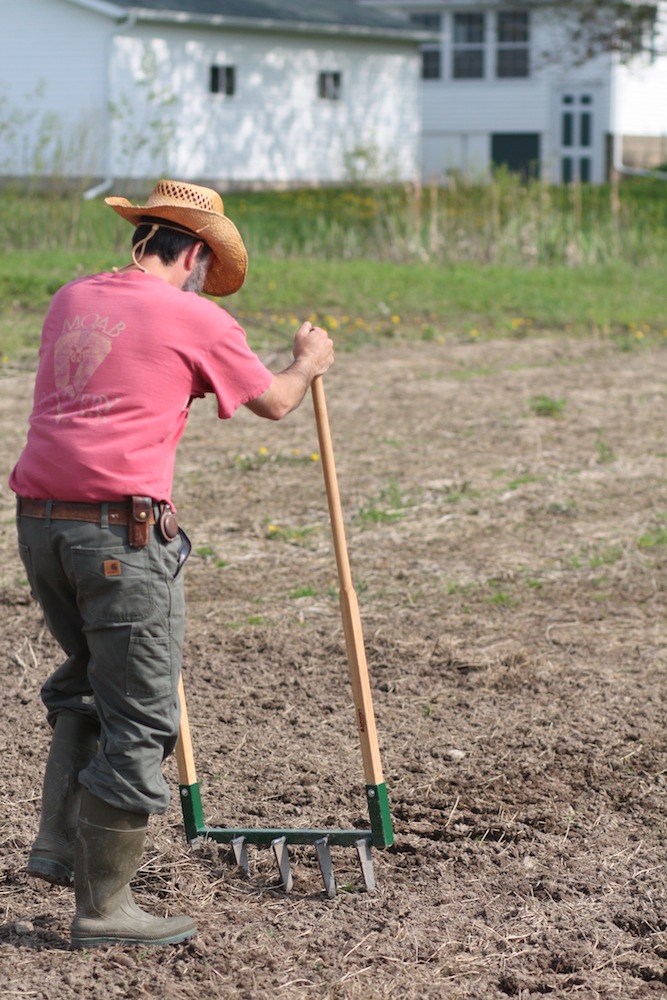
broadfork

Bigger operations that specialize in one or two crops usually use mechanical transplanters, but since this farm is small and diverse, I do all the transplanting by hand. Do it enough, and you become pretty efficient at it. Once the plants are in the ground, I like to water them in with a little diluted fish and kelp emulsion, an organic fertilizer that helps alleviate transplant shock and stimulates the soil’s biological life.
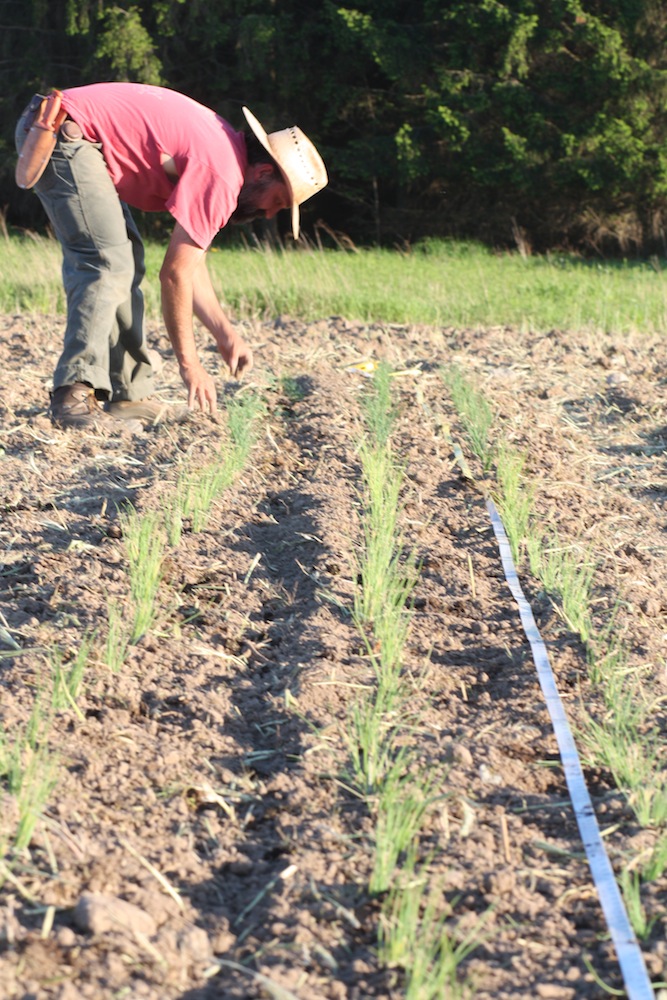
transplanting

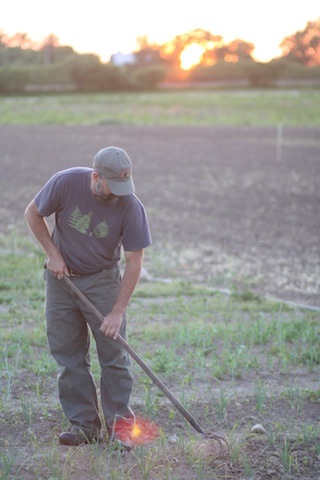
Since I don’t spray any herbicides, I control weeds primarily through cultivation and manual weeding. In an ideal world, if you stay on top of your cultivation, you can avoid the time-intensive chore of weeding. Of course, we don’t live in an ideal world, so sometimes everyone needs to pitch in and pull some weeds.
cultivating

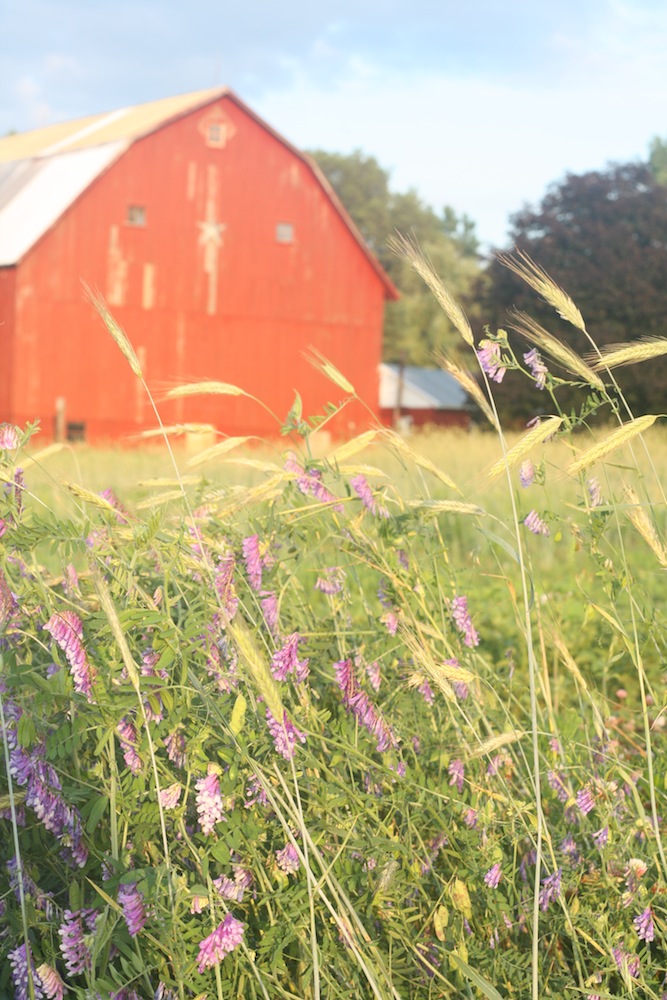
In the parts of the field I don’t use for vegetables, I sow cover crops. Cover crops do so many things — suppress weeds, build soil organic matter and fertility, feed and protect pollinators and other beneficial insects — I’d be a fool not to make use of them. Plus there are few things as lovely as a patch of vetch and clover full of buzzing bees on a summer’s day.
vetch

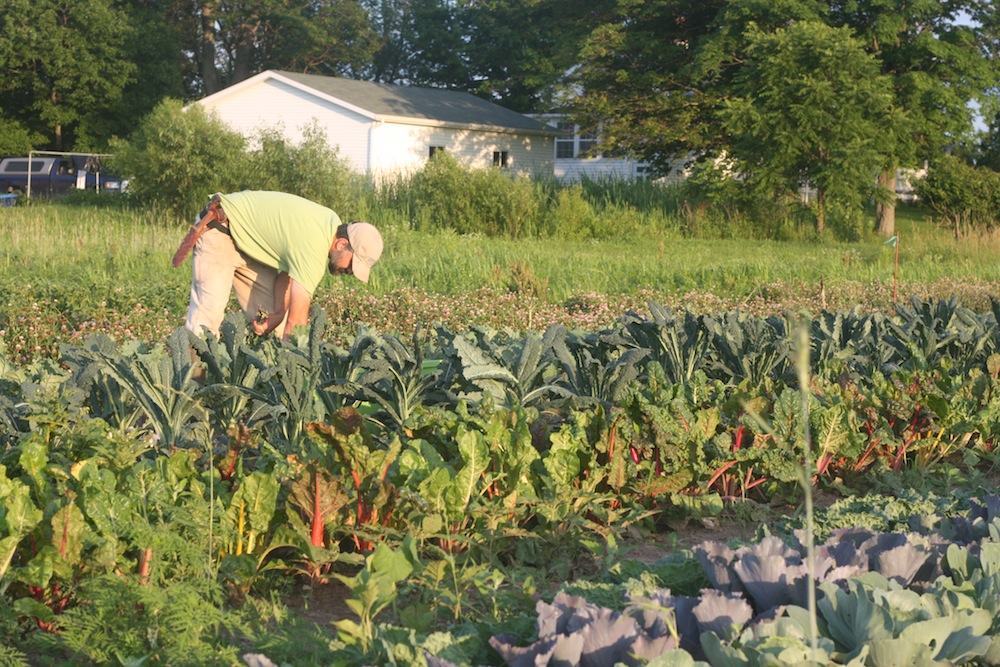
Harvesting is all done by hand, too, and once we get into July, this job takes most of my time. By mid-August, it’s all I do, rain or shine. I’m not complaining, because this is the whole reason I’m here — to provide fresh, nutrient-dense food to the many households who are this farm’s members.
harvesting

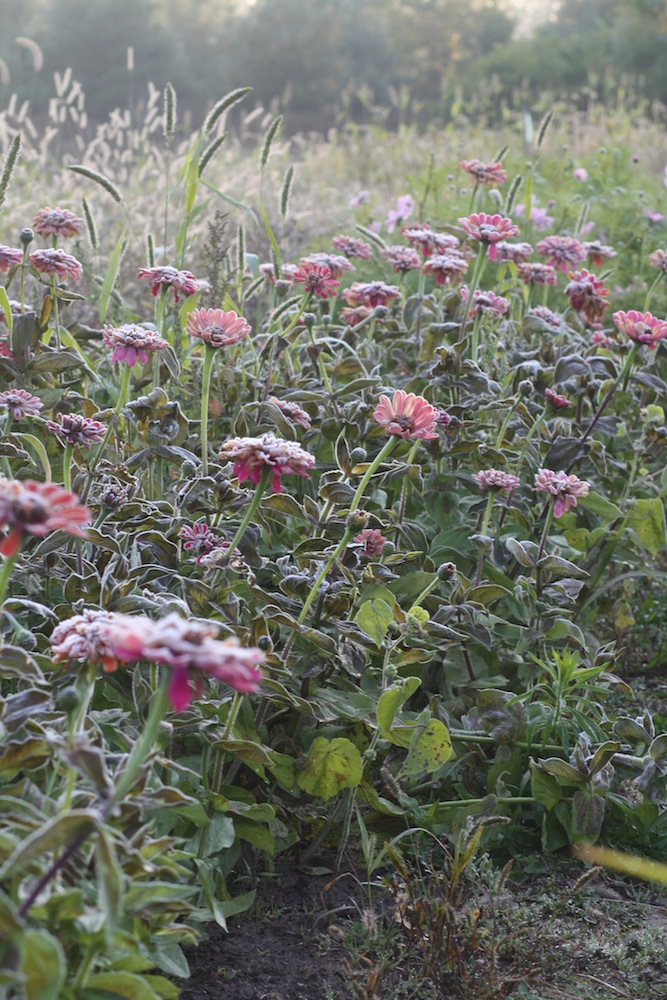
Soon enough, though, comes the year’s first frost, which I start watching for toward the end of September. While this means the end of the heat-loving summer crops, the cold-tolerant fall crops come into their own. At this point, I start anticipating winter and begin the long process of putting the farm to bed.
frost

Eventually, by the end of October, even the hardiest vegetables are winding down. All that remains to be done is sowing the now-bare fields in a cover crop to protect the soil over the winter, planting and mulching the next year’s garlic, and cleaning and storing all the tools, supplies, and equipment for the winter so that I am not greeted by total chaos the following spring.
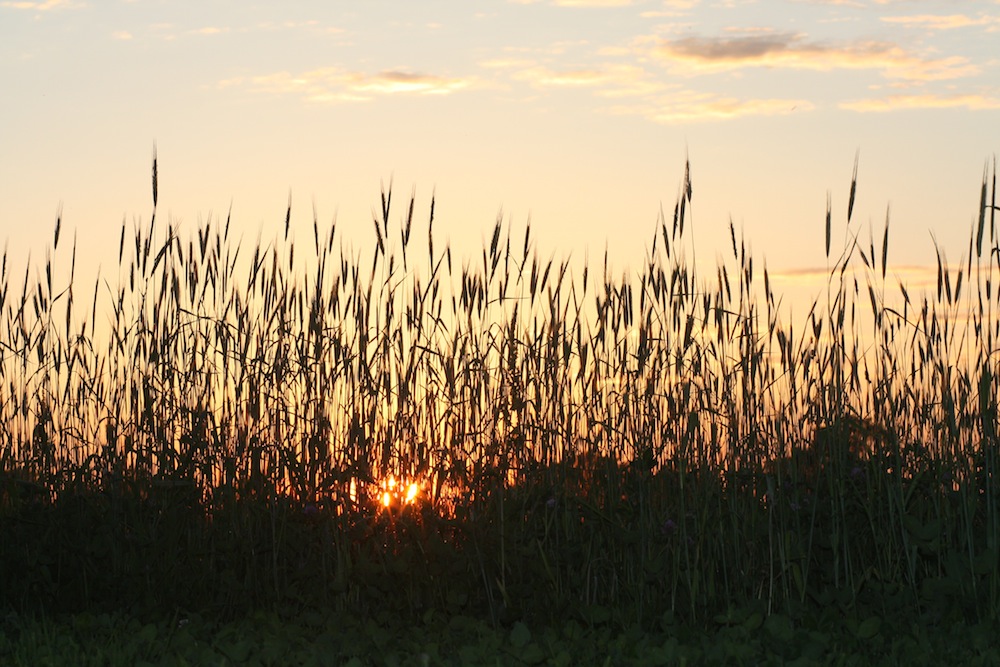
sunset

With the season behind me, there is a moment for rest and, most importantly, for thanksgiving, and then I again turn my mind toward spring.
Seeds and Spreadsheets

One of this month’s biggest projects is generating the farm’s planting schedule — basically a long spreadsheet that tells me how much of what to plant when. The spreadsheet calculates most of the data on its own once I enter my required yields, and it keeps things running well and on track, so long as I use accurate data.

Last season, I made a good educated guess where I needed my yields to be, but it was still only a guess. It turned out I estimated a little on the low side, so I had to miss market a few times to make sure that the CSA was well served. (Last year’s weather challenges didn’t help any either.) Skipping market was a tough business decision, but it was the right thing to do for the CSA. This year, though, I have the great benefit of all last year’s experience, so I can enter better data into the schedule.

What’s more, since I am adding twenty shares to the CSA, my seed order becomes large enough to start taking advantage of some economies of scale. For example, I can buy an eighth of an ounce of Blue de Solaize leek seeds for $2.20, but a whole ounce costs me only $9.00. What’s more, one of my main sources, Fedco Seeds, offers some pretty generous volume discounts. The upshot is that even though this year I ordered more than two and a half times as much seed as last year, I paid less than twice as much.

Another advantage to a larger seed order is that instead of doubling the amount of one variety, I can add a second. That may not optimize the volume discounts, but it does increase the diversity of what I put in the shares. It also helps me hedge my bets in the fields, since different varieties like different growing conditions and possess different disease and pest resistances. Put another way, the more the merrier.

Beginnings

We now sit midway between solstice and equinox, so, astronomically speaking, we’re already halfway to spring. Back in the day, when auguries were assigned to animals, somebody in ancient Europe decided the badger’s behavior on this day determined when winter would break. In the move to the New World, someone for some reason transferred this office to the groundhog; hence our Groundhog Day celebrations.

As a rule, I take a dim vim view of prognosticating rodents, but I will affirm there is something to noting this hinge between winter and spring. Like clockwork, come the first days of February, I start itching to launch again into the old cycle of sowing and reaping. In fact, the new season has been underway for a few weeks now. I placed my seed order in early January to avoid having key varieties backordered, and I calculated my potting soil needs by early February so that it is delivered in time for seeding the first week of March.

Making these arrangements so far in advance does take a measure of faith, because I won’t know how if I reach my goal number of CSA shares until May. So I order assuming that I make that mark, and I hope for the best.

The Beginning of the End

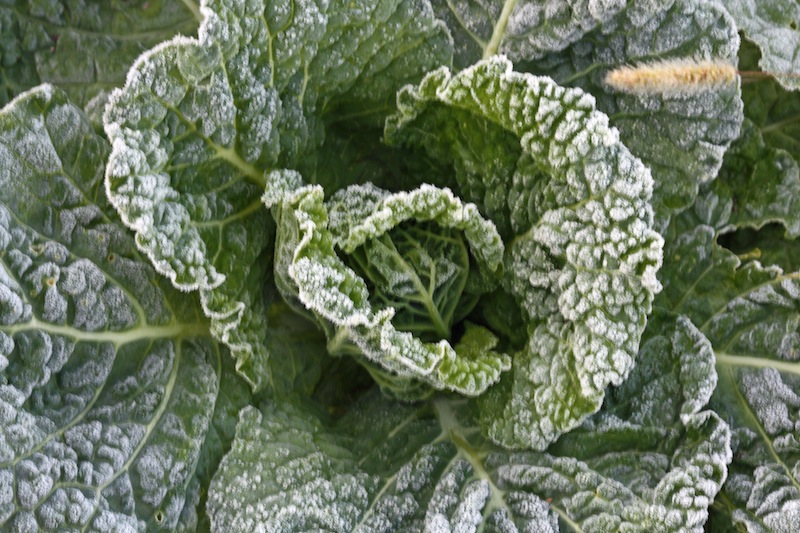
frosty cabbagePatchy frost yesterday morning, and a widespread frost this one. No worries. I was mostly prepared. By Wednesday, I had either covered or harvested the important frost-sensitive crops, and most everything else can handle the cold. But it’s sad to see the flowers go. I would have liked them for tomorrow’s market, and they really can’t be harvested too far in advance. And I did overlook a couple of hoses out in the field. I’ll see later today after things warm up if they froze and split.

I have to tell you, so long as it doesn’t catch me by surprise, that first fall frost is really a relief. According to the climate data from the National Weather Service, a week ago we had a 50 percent chance of frost, and by next week a 90 percent chance. So this one arrived right on schedule. The old-timers will tell you a full moon predicts a frost, but people have run the numbers and can’t find a correlation. Probably the cold, clear air just makes the full moon appear bolder, and people take greater note of it. I sure did checking my row covers the night before: that big, bright orb cresting the trees along the east side of the barn, casting silver-gray light across the fields and saying, Time to wrap this up, friend.

Gifts

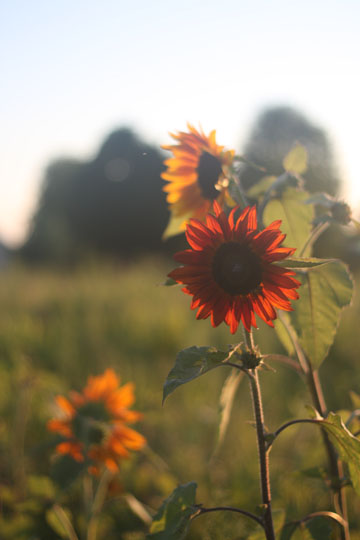
evening sunflowersThere’s a part of the field grown up in weeds that I’ve been telling people is being left fallow accidentally on purpose. I grew vegetables on it last year, and this year I intended to plant it in clover and leave it be. But when the cold spring delayed my primary tillage, that area was the only part of the field I could work, so I changed my plans and started planting there. Then, in June, with all the rain, that section turned out to be too wet to cultivate, and the weeds took over much of it. So I changed plans again and intended to plow it all under in the summer once the few crops planted there were harvested.

But as the season progressed, in among the weeds, I found all sorts of volunteer plants self-seeded from what I grew last year: some winter squash, a couple of tomato plants, and patches of clover and wheat from the cover crops I sowed last fall. But mainly there were flowers — sunflowers and cosmos and tithonia, plus some native queen anne’s lace, goldenrod, and chicory for good measure. So I decided, finally, to let the weeds and the wildflowers and the volunteers stay. All summer I have been harvesting out of that section to make bouquets to sell at market and to add to the CSA share from time to time, little gifts from the land to us all.

Horsepower, Part 1

One thing has become clear to me in the past two months: This farm does not have enough horsepower behind it. I suspected that coming into this season, but I know it for sure now.

I chose not to buy a tractor this year. In many ways, for vegetable production, a walk-in cooler and irrigation well are more critical than a tractor. I planned to build a cooler this season, drill an irrigation well the next, and start thinking about buying a tractor after that. In the meantime, I would rely on a neighbor for my spring tillage, and use my big walk-behind tiller for making beds. It would be hard work, but looked totally feasible.

Boy, was I wrong.

First, this spring’s fieldwork did not unfold as planned. Jay of Grassfields, an organic dairy south of town, has been growing forage crops on the parts of the field I am not using in exchange for his disking the area I need for vegetables. Last year, that arrangement worked great. This year, with the spring being so late and wet, it was a challenge scheduling my overdue fieldwork alongside Jay’s. Everything got done in the nick of time, but it did highlight a weakness in the system.

And second, the condition of the soil further complicated things. My little tiller just isn’t the right tool for addressing the level of soil compaction I have in some places. Some sections are so hard the tines just bounce off the ground. Not only is that a waste of time (and fuel), it’s hard on the machine. I bought a broadfork this year to help the work along, and while that tool makes the job easier, it by no means makes it easy.

So how things have been shaking out this summer is that I first wait for the soil to dry out enough to work it. Then I put everything aside and make as many beds as I can before it rains again. For each bed, I make a couple of passes with the tiller. Then I work the soil with the broadfork, essentially breaking up the hardpan by hand, in eight-inch progressions down and back the length of the fifty-foot bed. Last, I take a few more passes with the tiller, working progressively deeper until I max out the depth of the machine. After, I start the whole process over with the next bed.

Memorial Day weekend saw one such big transplanting push. A big dairy operation down the road farms the field across from us. They were out, too, with their enormous, dinosauric machines, and were able to spread manure, disk, and seed that forty-odd-acre field in the time it took me to make six fifty-foot beds.

(Later, out of curiosity, I looked up the specs for those tractors: Used ones start at over a quarter-million dollars, far more than what I will end up spending to get this entire operation off the ground, so I really do not envy them.)

It happened that Tom from Groundswell Farm stopped by that day (he has family in the area), and I bitched to him a while about the whole business. He didn’t speak for a moment, then said, “You know, that’s how all of us started out” — “all of us” meaning the area farmers doing the kind of farming I am trying to do. And he went on to point out how much you learn about your soil, working in that fashion, and how important that was.

I took his point. I remembered how last year, when I first had my tiller, I worked up a twenty by hundred foot plot before accepting that the soil was too wet to work. A rookie mistake, but how much worse it would have been, how much more extensive the damage, had I been behind the wheel of a tractor.

After Tom left, I sucked it up and persisted at making my beds, and for the most part kept this season’s transplanting and seeding schedule on track. But I have purchased each one of those beds dearly and felt as though I have had time for little else.

So I started shopping for a tractor.