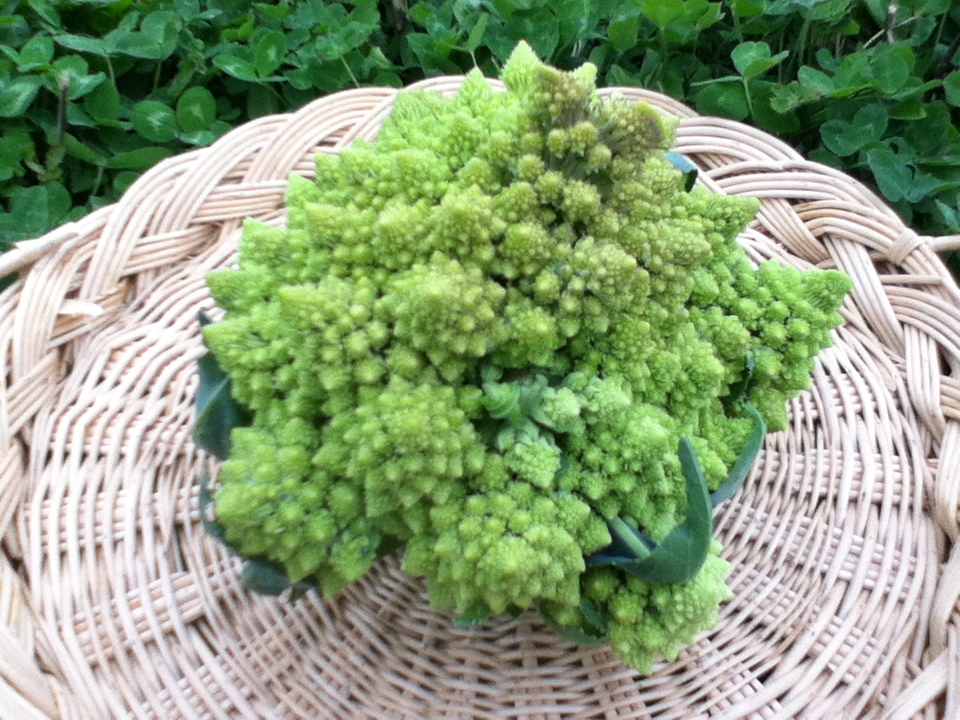
The harvest for tomorrow’s market is in and ready to go. Kale and chard, of course, and leeks and beets. We’re coming to the end of the tomatoes and peppers, though those plants are still producing for now. There will be broccoli and mini-cabbages (half the size, but twice the fun!), plus, new this week, romanesco cauliflower. So come on down to Fulton Street and get your Mandelbrot on.
Satisfaction
Fixing up this old fragment of a farm has had its share of unwelcome surprises, but this weekend the place gave us a gift.
At the front corner of the property, out by the road, stands an old apple tree. Like much else around here, it had been neglected — unpruned, full of suckers and deadwood, hollow. I did not expect it to amount to much, maybe pretty blossoms in the spring and later some windfalls for the deer, but certainly no apples of any quantity or quality.
But this fall, the branches hung heavy with ripening fruit, and last weekend we harvested half a bushel’s worth. Not the prettiest or largest apples you’ll ever see, but plenty for a small batch of applesauce and maybe a pie. Enough, or at least more than I asked for.
Harvest Morning
Finches feeding in the sunflowers this morning, flitting from bloom to bloom. Some have said I should tie bags over the flower heads to protect the seed, but I would rather leave it for the birds and their wild, secret lives, and consider that my harvest.
Equinox
Glance at the farm right now, and it still looks like summer: red tomatoes hanging on the vines, the green leafy canopy of the trees edging the field, rows of bright sunflowers nodding in the breeze. But look closer. The tomatoes are slow to ripen and not quite so sweet and tender as they were a month ago. Orange and red tints the leaves that are starting to drift across the lawn. And the sunflowers are shaggy and ragged, their heads hanging heavy with seeds. Fall is surely arriving.
We had a close call, frost-wise, last weekend. Early, but not unheard of. This week the odds become fifty/fifty, and it’s all downhill afterwards. I usually look forward to this necessary downshifting, the transfer from beans and tomatoes and peppers to leeks and brussels sprouts and winter squash. This year, though, I am not quite sure I am ready for it. The wet spring and cool summer delayed the warm-weather crops and lowered yields, so I would welcome a little longer season. But we will get what we get, which is always the case. The trick is to be thankful, which is also always the case.