Once again, I am thankful for the opportunity to present a class this fall at the Frederick Meijer Garden on all the ins and outs of growing garlic in the home garden. I would love to see you there!
Great Garlic! Frederik Meijer Gardens and Sculpture Park
October 27, 6:00-8:00 PM
Learn about the many varieties of garlic. Selecting, growing, saving seed garlic, planting schedule and more will be discussed. Receive a garlic bulb sample to take home and plant.
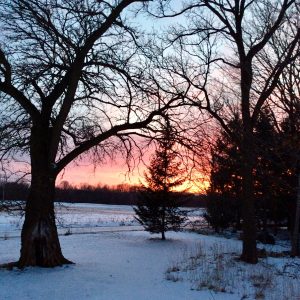
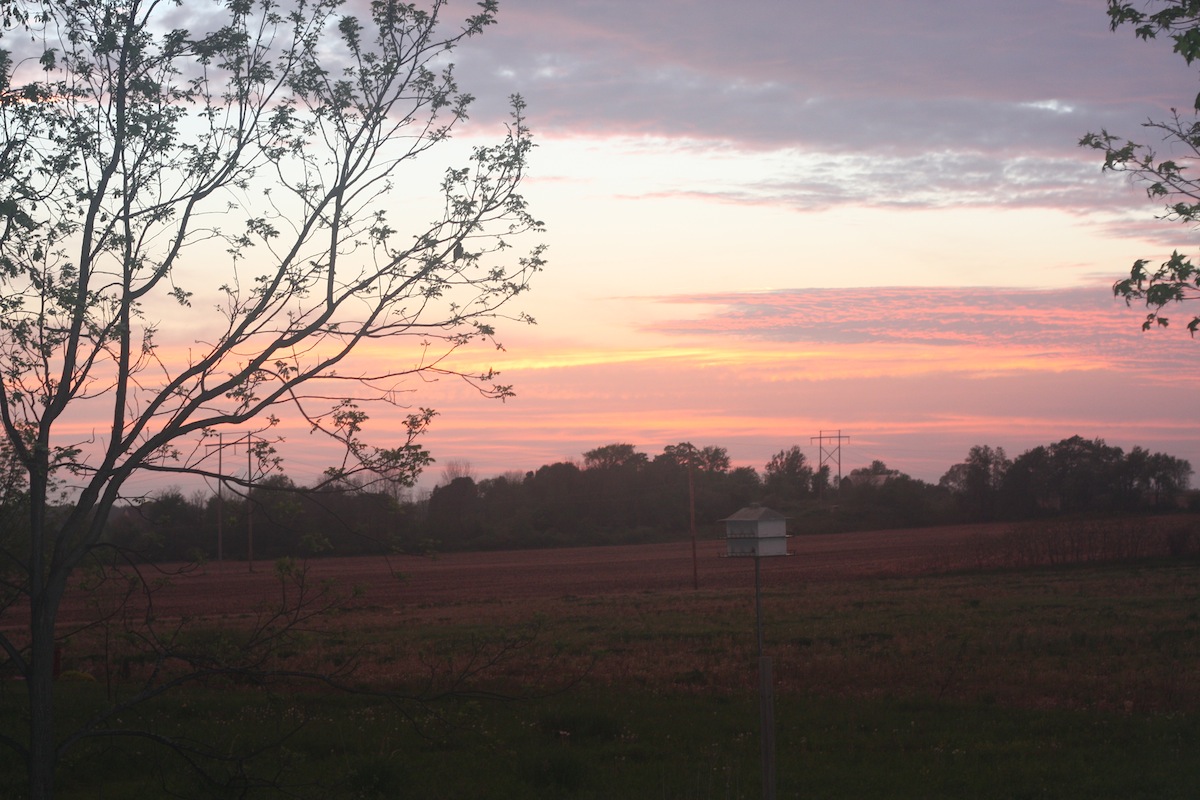
To tell the truth, the farm is a little hard to love this time of year, especially on a day like yesterday: flat gray skies brooding over fields of gray frozen mud, only interrupted by tussocks of dead gray grasses and bare gray trees. It’s better on a clear day, like today, when pale blue skies promise spring. Or after dusk, when Venus burns high and pure in the cold western sky, escorted the past couple of nights by the thin crescent of the new moon.
New life brews underneath that monolithic grayness, though. The first of the early bulbs are just poking through the soil, and the sap is running in the maples and walnuts. The first robin of the season sang this morning outside our bedroom window. This weekend I heard the trill of the returning red-winged blackbird, which I always take as a good omen.
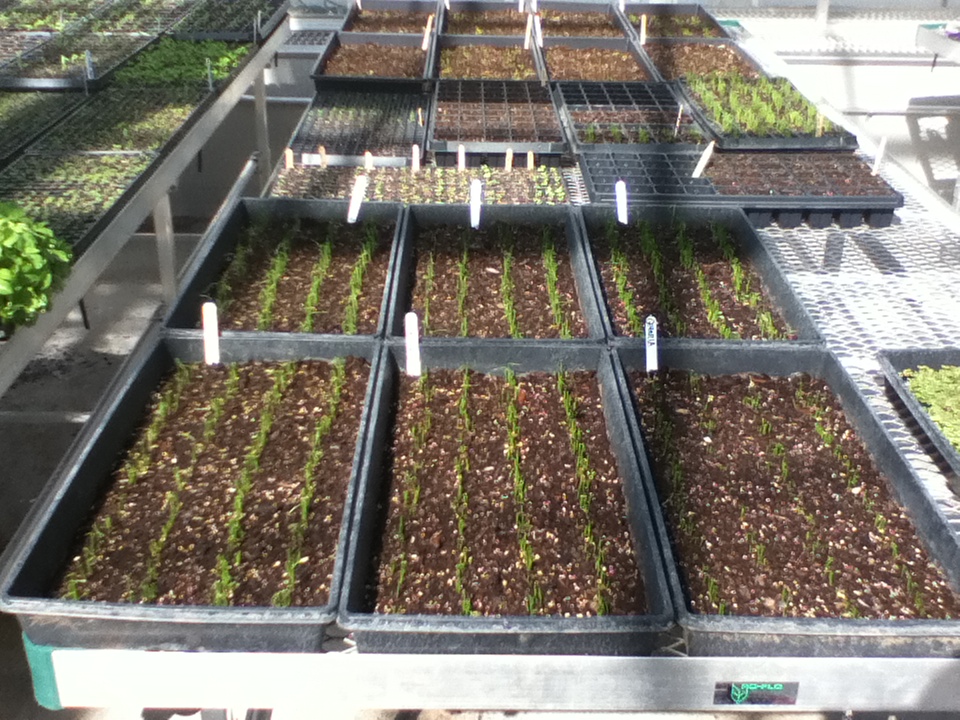
Plus, whenever I need a shot of spring tonic, there’s always greenhouse work to do. Yesterday afternoon, it felt like mid-spring in there, with little green seedlings pushing out of the dark soil, and the warm air thick with the good smells of growth. So far, I’ve seeded leeks and onions, celery and celeriac, parsley and kale, and the first of my scallion and lettuce successions. In April, the greenhouse work crescendos, but soon I can get out-of-doors and begin preparing the farm for the new season, which is where I really want to be.
This warmer weather of the past few days has, finally, given us a taste of spring. Farm planning and seeding are well under way and will only accelerate from here.
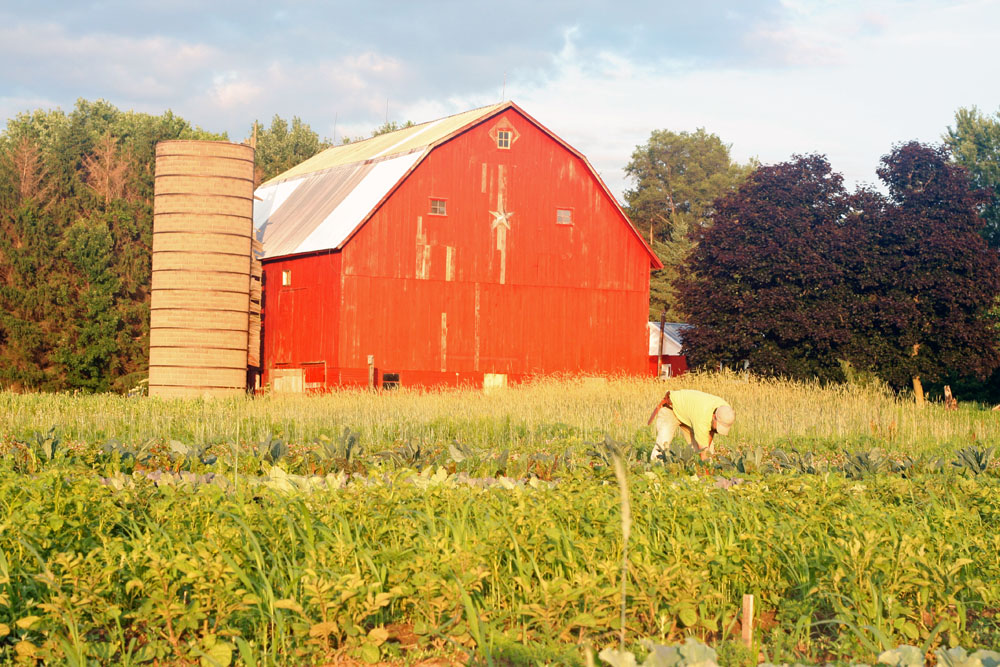
Because the farm here is in its early years — under our care, at least — developing infrastructure is vital to its future success. We are fortunate in many ways. The old barn (circa 1908) is in pretty good shape, all things considered, and our new-to-us 1950s tractor will make this season so much easier. And we have a cooler now, and a tiller, and all sorts of tools to make the field work manageable. But in each of these first few years, the infrastructure needs remain: from the small — tomato stakes and nursery pots — to the large — a wash station and a greenhouse.
We know that these things will come in time, as the CSA grows and our financial capacity increases, but it does make planning for each season unnervingly unpredictable, since we don’t often know well in advance how many members we will welcome in any given year. So we base the budget largely on hope, good planning, and just a touch of worry for good measure. It’s an adventure, after all, right?
Should you be thinking of joining us for the season, there is no time like the present. We would love to welcome you on this adventure with us.
I am thankful for the opportunity to present a few classes this spring on home gardening, and I would love to see you there!
Gardening Basics 1 Baxter Community Center
March 25, 6:00-7:30 PM
Fee: donations appreciated
Designed for the novice gardener, this class will help you set your gardening intention, select an appropriate garden site, understand your growing season and hardiness zone, choose appropriate plants and cultivars, and create an effective garden layout.
Gardening Basics 2 Baxter Community Center
April 1, 6:00-7:30 PM
Fee: donations appreciated
Continuing Gardening Basics 1, this class will present basic practices for soil preparation, seeding and transplanting, watering and fertilizing, weed control, and pest and disease responses, as well as harvesting guidelines.
Grow Vegetables Organically Frederik Meijer Gardens and Sculpture Park
April 14, 6:30-8:00 PM
Fee: $20 FMG members, $27 non-members
Learn organic methods for how to prepare the site and amend the soil, how to select the best varieties and rotate crops, and how to prevent problems and respond when they arise.
Companion Plants in the Vegetable Garden Frederik Meijer Gardens and Sculpture Park
April 22, 6:30-8:00 PM
Fee: $20 FMG members, $27 non-members
Learn why companion plants should be an essential part of your vegetable garden and how you can create thriving “plant neighborhoods” by combining plant families with their companions.
Beneficial Insects in the Home Garden Downtown Market Grand Rapids
May 7, 6:00-7:30 PM
Fee: $20
Learn how to enlist the aid of the insect world in your vegetable garden, then build your own mason bee house to take home.
Up before dawn with too much on my mind to sleep, so I made coffee and watched the day arrive. The farm cat was up early too, waiting by the door, so I let him in and fed him his breakfast. Thick fog hung low over the empty fields and rimed the branches of the bare trees, and the sun, when it rose, shone only a pale disk barely burning through.
I realize lately I’ve gotten into the bad habit of thinking that farming is like war and that this pre-season planning is like preparing for battle. It’s true you need to have your act together before fieldwork begins. Once everything gets rolling, you have few chances to fundamentally change course. Ready or not, here it comes.
Harvesting kale one evening last summer
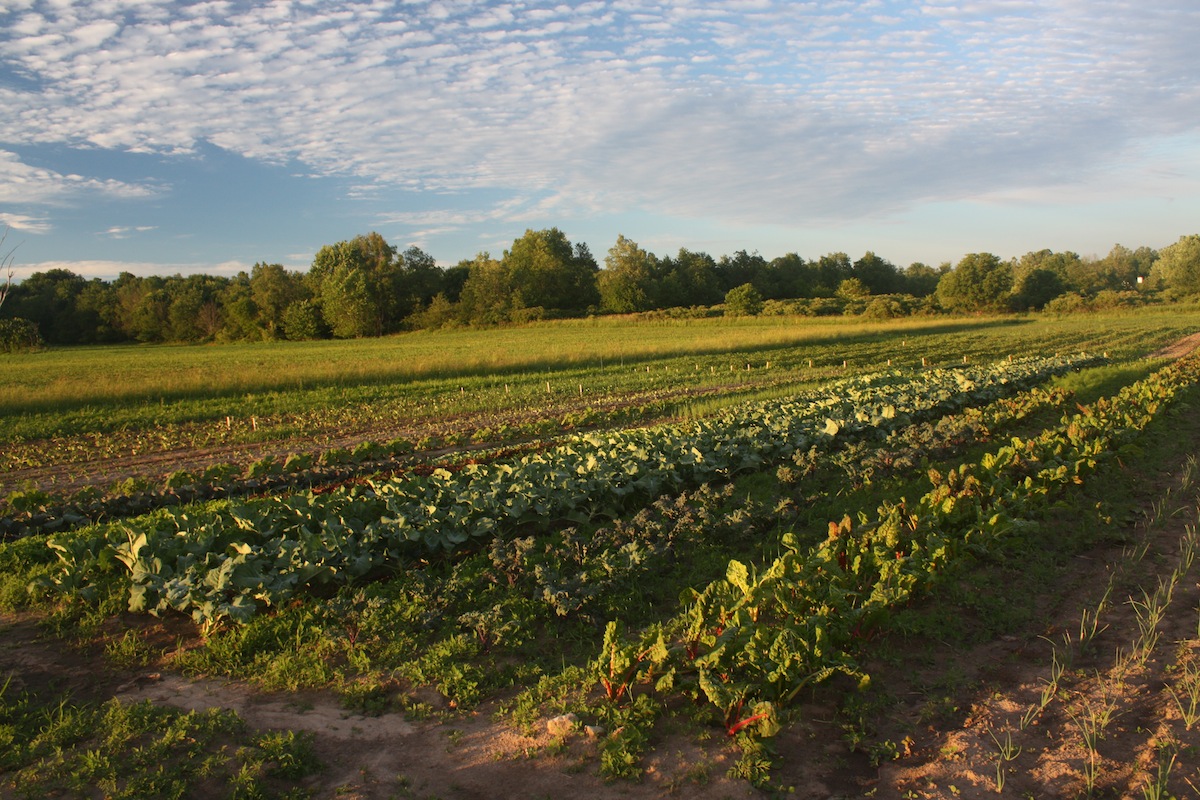
The mistake creeps in, I think, when I consider the farm a foe, though sometimes it surely feels that way, like I have that proverbial wolf by the ears, the one you can neither safely release nor hold on to much longer. But that is the narrow view. The farm is not my adversary but my ally.
When I teach classes on organic gardening, I try explaining it in contrast to its opposite, mechanical gardening. Neither has to do with the presence or absence of machines in the garden but with how one views the garden. Is it like a machine, or is it more like an organism? A machine is human construction able to be calibrated to yield predictable results. The garden — and by extension, the farm — is not like this, and if you’ve ever kept a garden, you know that. The farm is, rather, like an organism — or, better, a community of organisms, and literally from the ground up. From the soil’s dense microbial life, to the plants sustained by that soil, on up to those nourished by those plants’ produce, and including all the insects, wildlife, and livestock in between. A whole network of creatures we did not create and upon which we depend for our very lives, with the farmer there in the midst, stewarding it all.
 Once again, I am thankful for the opportunity to present a class this fall at the Frederick Meijer Garden on all the ins and outs of growing garlic in the home garden. I would love to see you there!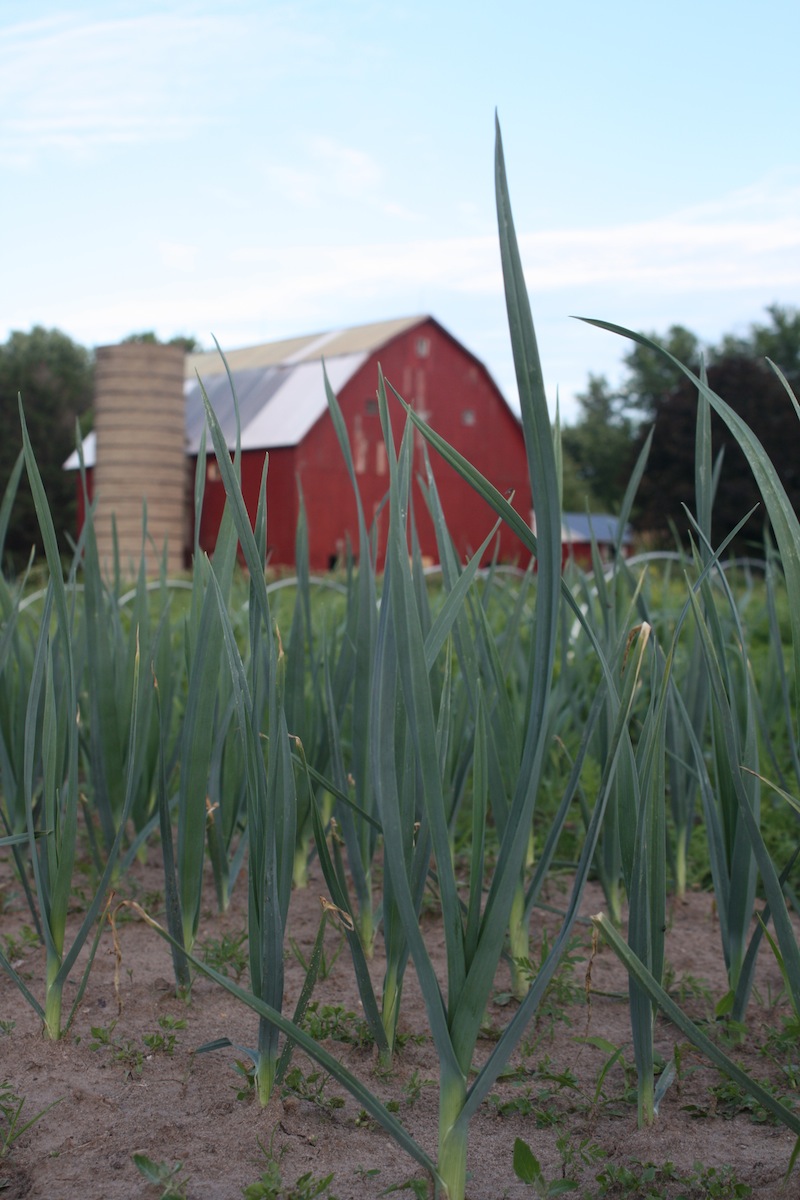
 Blackbird Farms