Three Welcome Spring Visitors

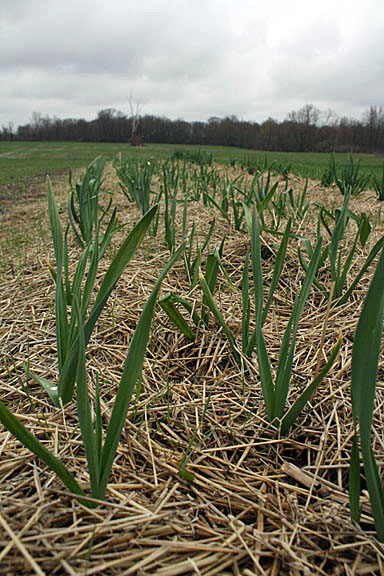
garlic

The garlic is up and growing strong, a surety of the coming season. I was worried the harsh winter and wet spring would hinder it somehow, but I can see my fears were foolish. Soon enough, the stalks will send out long curlicued stems, called scapes, which make good pesto, among other things, and is one of the first delicacies of summer.
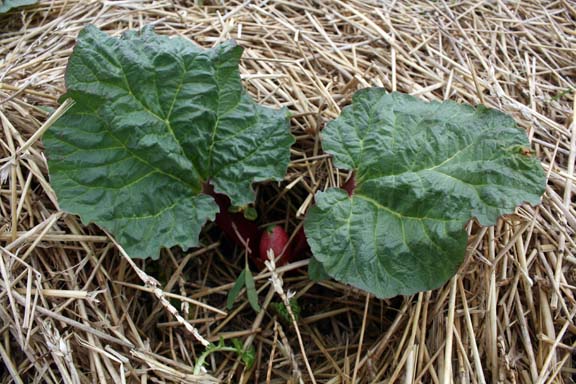
rhubarb

The rhubarb is up, too. This makes me especially happy. I grew this rhubarb from seed Shel bought me when we were in Alaska on vacation with my family a few years ago.

There’s a story behind the seeds: A farmer just outside Skagway, name of Henry Clark, grew acres of the stuff. In the long Alaskan summers, his rhubarb grew to folkloric size — leaves broad as a man’s arm span with stalks thick as his wrist. Henry Clark came to die, as all men do, and the townspeople, fearing for the future of this renowned rhubarb, came with their spades and wheelbarrows, and each took home a clump of the plant. To this day, when you walk the side streets of Skagway, you see rhubarb patches descended from Henry Clark’s.

I started a batch of seedlings a couple of years ago and have been looking for a home for them ever since. I am glad I have found one for them now.
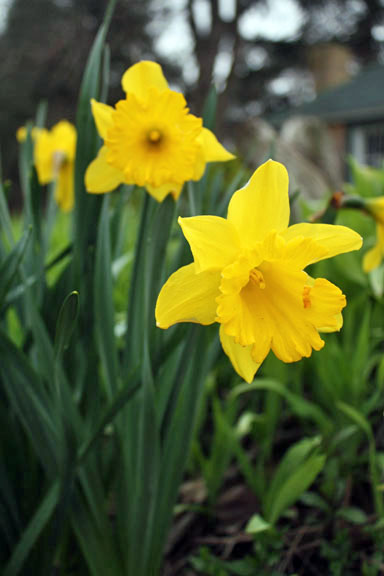
daffodils

And the daffodils have been up for some time now. These are my favorite spring flower. I especially like how they abide in the landscape. I know of a clearing in some woods south of here where they thickly cover the ground, the last persistence of someone’s will, flourishing long after the house and barn have slid back into the earth.
Leaving the Edges Wild

Past couple of days, the farmer to the north of us has been burning down fencerows. He dropped by a week or so ago to talk about the boundary we share. He wanted to clear it out so the branches wouldn’t knock the lights off his tractors, and so he could squeeze another four rows of corn in that field. He said I could go ahead and cut any firewood I wanted. Said it would be good to clear out all those trash trees.

I said he was welcome to cut back the branches, but if it was all the same to him, I’d like to keep the trees and brush and such. I’m sure he thought I was a loon, but he said okay.

I know the conventional wisdom says to squeeze out as much yield as you can, to plow from fencerow to fencerow. There’s not much room for unkempt places in the conventional wisdom. But I prefer to leave the edges wild.

It’s not only that organic practices require I maintain a thirty-foot buffer zone between my farm and any non-organic agriculture. Or that old fencerows acting as windbreaks help protect the soil from erosion. Or that the native plants that grow up in them attract beneficial insect predators and pollinators, as well as provide habitat for all sorts of wildlife.

The real reason is that I just like the look of them, trash trees, weeds, and all. There’s always something interesting to see in them. The one out back has a tangle of an old barbed-wire fence running through part of it, some of the posts still upright. An apple tree stands in it, grown up, I like to imagine, from what was left of some old farmer’s lunch. And all through it the trout lilies, with their dappled, dagger-shaped leaves and drooping yellow heads, are coming into bloom.

So, sure, I appreciate a well-ordered field’s soothing geometry, but those wild places hold secrets with a beauty all their own. I intend to keep mine.

Slow Spring

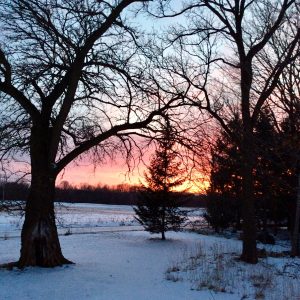
At long last, it seems like spring might arrive after all. Here at the farm, only the largest or most protected snow banks persist, and the robins are poking around the thawed and muddy earth. A couple of weeks ago around dusk I heard the sharp trill of the first red-winged blackbird of the season, and this weekend I saw that the daffodils planted along the foundation on the east side of the house have begun to push through the soil.  But it has been a slow start to the season, for sure, and the forecasters have predicted a wet, cold spring ahead of us.

So I’m betting that my carefully choreographed farm plan is going to be thrown off schedule almost immediately. Right now, there is a good deal of standing water in the field, which is not atypical but certainly gives me pause. If over the next month the soil doesn’t dry out enough, I will be late in getting my primary tillage done, which will delay the first plantings, which will delay the first harvest, and so on down through the line.

Which is how it goes, sometimes, and I can’t do much about the weather. I am, however, beginning to suspect that some of my drainage problems in the field are a result of its past history of conventional farming, especially the soil compaction that occurs when large implements and tractor-trailers are driven back and forth across the fields at harvest time. And soil compaction is something I can correct. One of the ongoing jobs for this year, and for many years following, will be returning the soil to good health. The soil’s problems didn’t happen overnight, and I can’t correct them overnight, as much as I would like to. So yet again this farm places me in a posture of expectant waiting, which is to say, of hope.

Luck and Heaven’s Favor

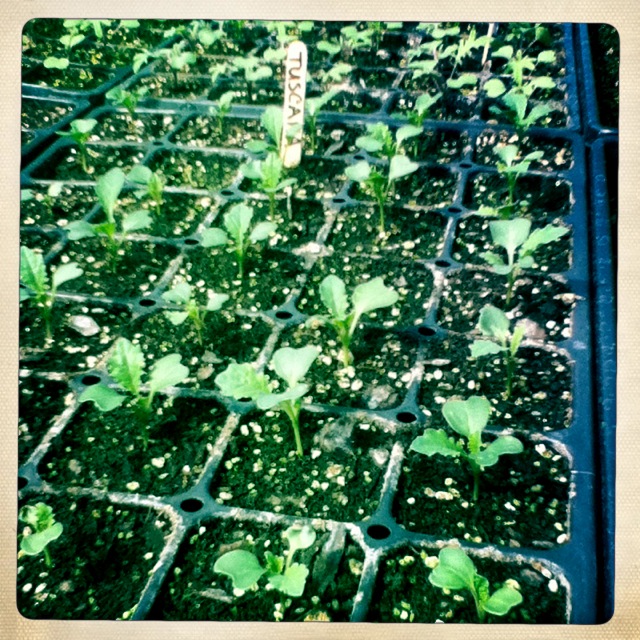
Yesterday I seeded celery and celeriac, tiny seeds sown into tiny cells and then placed on heat mats to germinate. To save on propane, which has become crazy expensive this winter, Aaron rigged up a germination chamber within his greenhouse, warmed by electric heat mats and space heaters. It seems to be working, though space is at a premium. After next week, when the seeding kicks into a higher gear, we’ll have to bite the bullet and fire up the big heaters, high propane prices or no.

Finally, I’m feeling the season accelerate. Usually I sense the momentum around Groundhog Day, but this year I’ve had my attention focused on the ongoing farmhouse renovation, so it’s taken a couple of days in the greenhouse to reorient myself.

The First Transplanting Last Spring

What’s more, the season just feels different to me than from previous years. I’m usually elated to enter again the cycle of the farming year, but this time around the joy is mixed with worry. This time around, because this season is my show to run, there is more at stake. I have been humbled by peoples’ faith in this farm, pledged by their paying upfront for produce that exists right now only as a box of seeds, and I am determined to deliver. But because I have the benefit of experience, I know full well the 147 ways things can go crosswise, and unless I am disciplined, my mind will swiftly review all of them, all at once. And that’s no way to be.

One of my favorite poems by Wendell Berry is his “Contrariness of the Mad Farmer.” There he writes of reaping by “luck and Heaven’s favor, in spite of the best advice.” And here I am reminded again that this is the heart of the matter: I will do what I can as best I can, but the final yield is ultimately and fundamentally out of my hands. Which is both sobering and freeing.

One of the things I ask our CSA members to pledge is to receive the season’s harvest with gratitude and delight, so it’s good here at the beginning to be reminded that I, too, must each year make this same promise.

It Begins

The First Flat of the Season

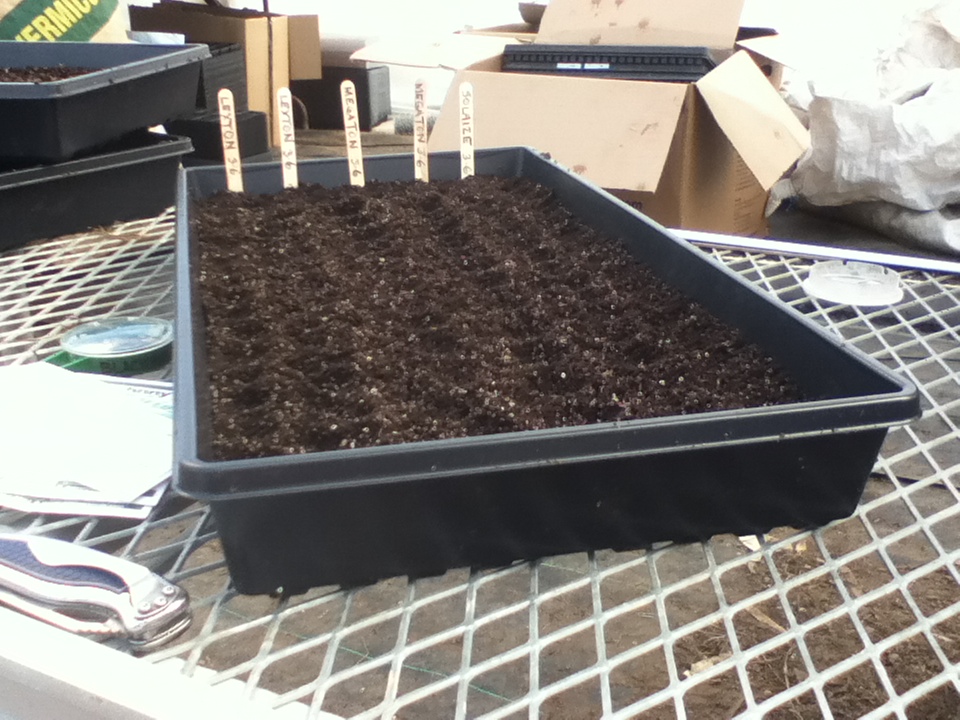
The farming season started last Thursday when I seeded this year’s allium crops: three varieties of leeks, five of onions, and one of shallots.

Alliums are all about patience. I’ll pull the onions and shallots late in the summer, and some of the leeks will be among the last crops harvested, staying in the field until just before the ground freezes. Fortunately, alliums aren’t bedeviled by a great variety of pests or diseases, though they do need to be kept weeded and irrigated so they size up nicely. On a small scale, mulch helps, both suppressing weeds and conserving moisture, and if I can find an economical way to cover four-hundred row-feet of beds, I will.

To propagate the alliums, I’m trying something new. In past years, I would sow individual seeds into each compartment of a ninety-eight-cell nursery flat. This year, to save space, I am sowing the seeds into furrows in open flats, five furrows to a flat. Once the seeds germinate, I’ll then gently transfer the small plants into their individual cells in divided flats, a process called “potting on.”

There are trade-offs, of course. Potting on adds time to the process, but it also allows me to use a soil mix richer than what I would use for germination, which means more available nutrients for the plants and ought to yield stronger transplants out in the field.

I am trying this new method at the suggestion of Aaron over at the Blandford Nature Center, where I am leasing greenhouse space for this season. One of the great things about being a CSA farmer in West Michigan is the camaraderie and cooperation among growers, and I am thankful for it.

Farm in a Box

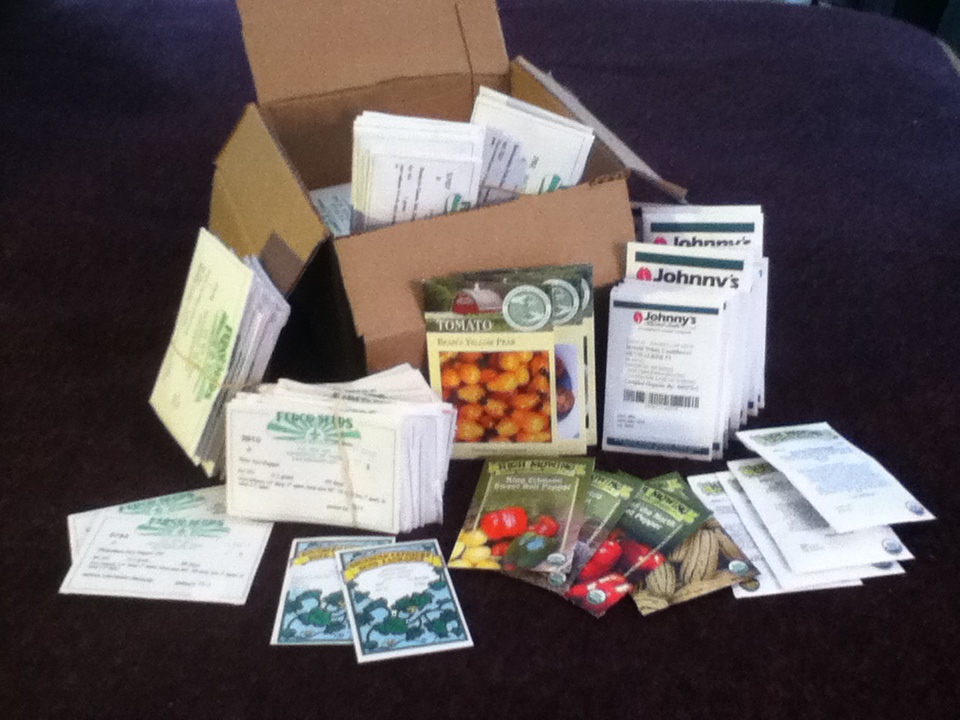
As of last week, the bulk of the farm’s seed order has arrived. So for the time being, the whole season can be contained in a large shoebox.

As most seasoned gardeners know, it’s easy to get carried away when leafing through seed catalogues in the dead of winter. Which is why I’m growing a winter squash called “Hooligan” and a tomato named “Captain Lucky.” (I’m not alone; sadly, Captain Lucky is backordered until mid-May.) But I did eventually whittle down the list from “Wouldn’t It Be Neat” to “This Is What I Really Need.”

2014 Seed OrderMost of the seeds came from Fedco. It’s a responsible company committed to organic practices. Their prices are also very good, so buying from them is an easy decision.

But Fedco doesn’t carry everything I want, especially when I am being particular about varieties. So a few seeds came from Johnny’s, another good company that largely serves small produce growers.

I also ordered a few packets from High Mowing Seeds. Their stock is all certified organic and carries a premium price, so I usually buy only varieties developed though their in-house breeding program. This year I decided to try a few of their improved winter squash varieties, which have been developed with the small grower in mind. We shall see.

And in some cases, there are specific heirloom varieties I want, usually tomatoes, peppers, and winter squash. I use two sources for these seeds: Seed Savers Exchange and the Southern Exposure Seed Exchange. Seed Savers is probably the most well-known advocate in the heirloom seed movement, and many of their varieties come with great stories behind them. Southern Exposure is a similar operation, but focused on vegetables most suitable for the southern part of the country, some of which can also be grown in the north.

Next, I need to create greenhouse and field planting schedules to keep everything running on track, but for now it is enough to shuffle through the stacks of packets, waiting for the world to thaw.