Sign-up forms for our 2018 season are now available. Register by January 31 and enjoy our “early bird” pricing: $500 for full shares and $275 for small shares. We would love to have you join us. There’s a place at the table waiting for you!
-
September In a Nutshell
A day of running around today: making produce deliveries, picking up equipment from the repair shop, keeping the crew on point and hustling, trying to keep on point and hustling myself. Moving from task to task, I kept passing the big flower bed along the west side of the barn. Back in June I planted it full of old-fashioned annuals like zinnias and four-o-clocks and bachelor buttons, and all are now in glorious full bloom. On one pass by, how the flowers were full of bees caught my eye. One big bee I noticed in particular, weighed down with pollen and working its way around the inside edge of a tall, lemon-yellow sunflower along the back of the bed. Hustling in its own bee-like way, gathering its stores before the winter winds blow.
That’s September in a nutshell, I thought later. Here we are, smack dab in the middle of Michigan’s glory, autumn bursting through with late-season light and color. And here I am, hustling through it, with the heavy harvests of fall before me and winter’s wind at my back. Does the bee attend to the flower’s beauty as it works its way through the day? Do I?
-
Before the Plunge
What strange weather we’ve been having, more like early April than late February. This past weekend, I saw the first red-winged blackbird of the season, and the daffodils in the farmhouse flowerbeds are poking though the soil. People have asked me what this early warm-up bodes for the coming season, and, honestly, I have no idea. Right now, it sure makes chicken chores easier, and the hens have enjoyed being outside in the fresh air and sunshine these past few days. I know my farmer friends who raise livestock are grateful for this weather, especially the ones who are elbow deep in lambing and farrowing right now. And warm, sunny days mean greenhouses burn less fuel, so that is welcome as well.
But no matter what the weather does, our season is set to begin in earnest when it always does, at the beginning of March — on the sixth, as a matter of fact, when I start in on the greenhouse schedule. Onions, leeks, and shallots are the first crops I’ll seed, followed by parsley and celery a week later. And as the greenhouse ramps up, I’ll start crossing other pre-season tasks off the to-do list: things like making sure I have enough flats and pots for planting and totes and buckets for harvesting, repairing what needs fixed and building what needs made, and deciding what gets planted where and when, and so on. And all these plans and preparations need to be well in hand by the beginning of May, when the madness of spring planting takes up all our time. So right now is a sweet time on the farm, that last quiet moment before the deep breath and long plunge into the cycle of the new season.
-
Spring Gardening Class Schedule
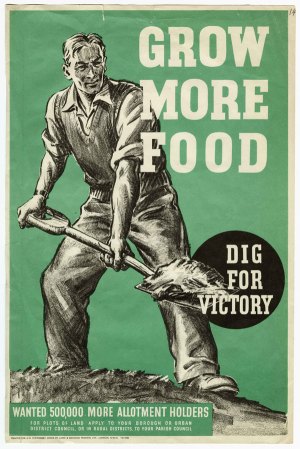 I am thankful for the opportunity to once again present a few classes this spring on home gardening, and I would love to see you there! (And if you are interested in my speaking to your organization or institution, please view the “Teaching and Consulting” tab above. Thanks!)
Cool Crops for the Spring Vegetable Garden
Frederik Meijer Gardens and Sculpture Park
March 9, 6:30-8:00 PM
Fee: $25 FMG members, $33 non-members
Discover crops that can be planted in cool spring weather—such as peas, fava beans, hardy greens, broccoli and kale—and begin enjoying your harvest sooner. Receive tips on soil preparation, frost protection, fertilizing and more!Tools and Tool Tips from the Pros
West Michigan Nursery and Landscape Association March Garden Day
March 11, Event Registration at 8:00 AM, Breakout Session at 11:45 AM
Fee: $45 in advance, $50 at the door
With Paul Keifer, owner, Specialty Gardens; and Allison Jesky, Irrigation Specialist, Hope College. In this panel discussion three gardening professionals will discuss their ‘go to’ gardening tools and provide tips for sourcing, using, and maintaining.Beneficial Insects
Grand Rapids Community Seed Exchange
March 18, Seed Exchange 10:00 AM-1:00 PM, Workshops noon-3:00 PM
Fee: $5 suggested donation
Come to exchange seeds with various local farmers, then stay for a series of gardening workshops!Gardening Basics 1
Baxter Community Center
April 5, 6:00-7:30 PM
Fee: donations appreciated
Designed for the novice gardener, this class will help you set your gardening intention, select an appropriate garden site, understand your growing season and hardiness zone, choose appropriate plants and cultivars, and create an effective garden layout.Gardening Basics 2
Baxter Community Center
April 12, 6:00-7:30 PM
Fee: donations appreciated
Continuing Gardening Basics 1, this class will present basic practices for soil preparation, seeding and transplanting, watering and fertilizing, weed control, and pest and disease responses, as well as harvesting guidelines.Beginning Vegetable Gardening
Frederik Meijer Gardens and Sculpture Park
April 20, 5:00-7:00 PM
Fee: $25 FMG members, $33 non-members
Learn how to successfully grow your own vegetables, whether you have a large yard or small space. Discover why companion plants should be an essential part of your garden. Learn which crops should be started from seeds and which to grow from transplants. Find out the best time to plant outdoors. -
Preparation and Expectation
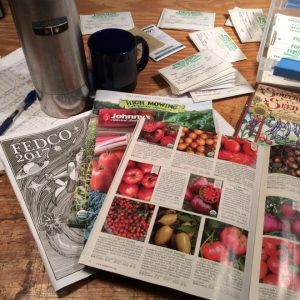 January on the farm is all about planning: What new thing will I try? Who will I hire onto the crew? Where did those tax records go? When will I fire up the greenhouse heater? Why, again, am I doing all this? (Sometimes, even, how in the world did I get myself into all this?) And each season’s plan begins with my drafting three connected documents: the seed order, the budget, and the seeding schedule.
I usually complete the seed order first, which, frankly, is backwards. I should really draft the budget first so I know how much there is to spend on seeds, followed by the seeding schedule, so that I know exactly which and how many seeds to order. But I like to have my seed order placed by mid-January. If I wait much longer, the greater the chance I’ll encounter back-ordered and sold-out varieties. So to make sure I get what I want, when I want it, I do a couple of quick, back-of-the-envelope estimates, and go from there. I can always place a supplemental seed order if I find later I’m a little short.
Once the seed order is completed, I turn my attention to the budget. To be honest, this is one of the more stressful chores of the season. Like a lot of businesses, farming’s margins are razor thin, and even a slight miscalculation can make the difference between ending the season in the black or the red. So I work hard to make the budget as accurate as I can, even overestimating costs a little so that there’s a little give in the numbers, just in case. But each year making the budget does get a little easier. As we build up our infrastructure, there are fewer critical big-ticket items to pay for, and as our membership grows, there’s more income to help pay for everything.
Finally, I draft the farm’s seeding schedule, which is the most exciting of the three to prepare. This big spreadsheet is the roadmap for the farm’s season, telling me how much of what vegetable to start, when to start it, what size pot to plant it in, when to transplant it into the field, and at what spacing. By November, it’s stained with coffee, smattered with mud, crinkled, creased, and covered in hastily scrawled notes — a historical artifact, of sorts, embodying the course of the season, and something I refer back to as my primary guide when the process starts all over again the next year.
And with each passing day in January, the farm stirs more and more from it’s hibernation, like some great animal eager for spring. To tell the truth, I’m eager for it, too.
-
CSA Forms For the 2017 Season
Sign-up forms for our 2017 season are now available. We would love to have you join us. There’s a place at the table waiting for you!
-
Solstice Lights
Welcome to summer! Not only was yesterday the longest day of the year, but also last night was the full “strawberry” moon. The day’s heat had broken by late afternoon, so it seemed a good time to light a fire and watch the evening unfold.
During the couple of hours before the sun set, swallows were about—not only the barn swallows but also the tree swallows, my favorites, glinting metallic blue-green above and snow white below, wheeling and diving over the fields. The deer were out, too, browsing in the clover and alfalfa growing along the back fencerow. And the sky—did you see it where you were?—with high clouds to the west wispy like horses’ tails and to the south piled high in distant thunderheads, all fired pink and orange, fading to blue then to gray as the sun set.
By then, the swallows had long gone to bed, but as the shadows along the field’s edge deepened, the fireflies began to wink on and off, pulsing their ancient code. By this time it was dark enough to see not only Saturn and Mars but also a few stars, especially the big dipper high above me, tipped as though to pour out summer thunderstorms over the earth. And then, as my fire burned to embers, the full moon, high and hard and bright, rose over the barn and silvered the ground ghostly white.
And I thought, What did we do to deserve such a world?

 Blackbird Farms